

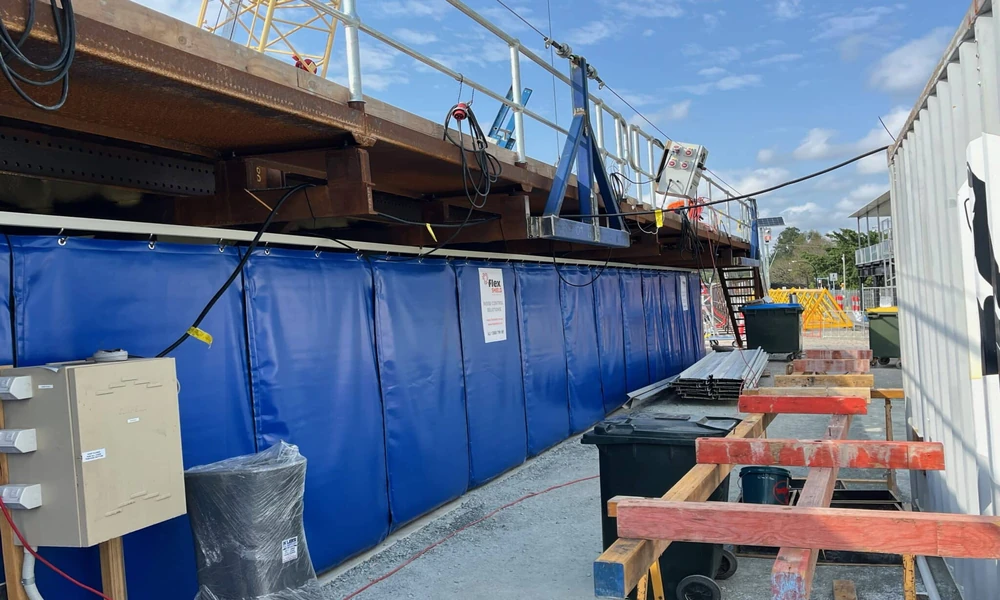
Noise control has become a fundamental part of modern construction site management. Most contractors are familiar with the standard measures: installing sound barriers, maintaining equipment, scheduling noisy activities appropriately, and monitoring noise levels throughout a project.
While these practices remain important, they are often only the starting point. In densely populated urban environments, where construction activities take place close to homes, offices, schools, and healthcare facilities, meeting noise requirements can require a more strategic approach.
The most successful projects often go beyond basic noise control compliance measures. They look at how noise is generated, how it travels, and how site operations can be adjusted to minimise disruption without compromising productivity. Understanding these additional strategies can help contractors achieve better results while maintaining positive relationships with surrounding communities.
Start with Site Design, Not Just Noise Mitigation
Many noise control efforts focus on managing sound after construction activities begin. However, experienced contractors often address noise much earlier by considering it during site planning.
The layout of a construction site can significantly influence how noise spreads. For example, placing noisy equipment away from sensitive site boundaries can reduce the amount of sound reaching nearby properties. Similarly, locating storage areas, temporary structures, or material stockpiles between noise sources and neighbouring buildings can help interrupt sound paths naturally.
These adjustments may seem minor, but they can contribute to meaningful reductions in overall noise impact without requiring additional equipment.
Create Noise Control Zones
Not every area of a construction site generates the same level of noise.
Rather than treating the entire site as a single noise source, some contractors divide operations into zones based on noise intensity. This allows them to apply targeted mitigation measures where they will have the greatest effect.
For example:
- High-noise activities can be grouped together in designated areas.
- Temporary acoustic barriers can be concentrated around specific operations.
- Lower-noise tasks can be scheduled closer to sensitive boundaries.
This targeted approach often provides better results than spreading resources evenly across the site.
Use Temporary Acoustic Enclosures
Standard sound barriers are effective for controlling noise along a site’s perimeter, but they are not always sufficient for particularly loud equipment.
Temporary acoustic enclosures can provide an additional layer of protection by surrounding individual noise sources.
These enclosures are commonly used around:
- Generators
- Compressors
- Cutting stations
- Mechanical equipment
Containing noise close to its source often delivers greater reductions than relying solely on perimeter controls. It also allows contractors to focus mitigation efforts where they are needed most.
Consider Equipment Selection More Carefully
Equipment choice can have a significant impact on site noise levels.
Many contractors naturally focus on productivity, performance, and cost when selecting machinery. However, noise output is becoming an increasingly important consideration.
Newer equipment often incorporates improved engineering that reduces noise generation. Electric-powered machinery can also offer advantages over traditional alternatives in certain applications.
While replacing equipment is not always practical, noise considerations can play a role when evaluating future purchases or rental options.
Manage Noise Through Scheduling
Scheduling is one of the most underappreciated tools in noise control.
Most sites already schedule noisy activities during permitted working hours, but experienced project teams often take this further.
They may:
- Avoid performing multiple high-noise activities simultaneously.
- Sequence work to minimise cumulative noise exposure.
- Schedule particularly disruptive activities during periods of lower community sensitivity.
This approach helps reduce peak noise levels and often leads to fewer complaints from neighbouring properties.
Monitor Trends, Not Just Compliance
Noise monitoring is commonly used to demonstrate compliance with project requirements. However, its value extends far beyond regulatory reporting.
The most proactive contractors use monitoring data to identify trends and patterns.
For example, they may discover:
- Specific activities that consistently generate higher noise levels.
- Certain locations where mitigation measures are less effective.
- Times of day when complaints are more likely to occur.
This information allows teams to make informed adjustments before issues escalate.
In many cases, trend analysis is more valuable than a simple pass-or-fail compliance check.
Engage with the Surrounding Community
Noise management is not solely a technical challenge. It is also a communication challenge.
Even when a project complies with regulations, nearby residents and businesses may still experience inconvenience. Proactive communication can help reduce frustration and build trust.
Effective community engagement might include:
- Providing advance notice of particularly noisy activities.
- Sharing project timelines and expected impacts.
- Establishing clear channels for feedback and enquiries.
When people understand what is happening and why, they are often more accepting of temporary disruptions.
Review Noise Controls Regularly
Construction sites are constantly evolving.
Equipment moves, work zones change, and project phases introduce new activities. A noise control strategy that works during excavation may not be suitable during structural works or fit-out stages.
For this reason, the most effective contractors regularly review their mitigation measures.
This may involve:
- Repositioning sound barriers
- Updating site layouts
- Adjusting work schedules
- Introducing additional controls where necessary
Noise management should be treated as an ongoing process rather than a one-time setup.
Focus on Noise at the Source
One principle remains true across virtually every construction project: controlling noise at the source is often the most effective strategy.
It is generally easier to reduce noise before it spreads than to block it later.
Practical measures include:
- Maintaining equipment properly
- Replacing worn components
- Using quieter tools where possible
- Installing vibration-reducing mounts and isolation systems
While these measures may seem straightforward, they can have a substantial cumulative effect on overall site noise.
Think Beyond CompliancePerhaps the biggest difference between average and exceptional noise management is mindset.
Some contractors focus primarily on meeting minimum requirements. Others view noise control as part of delivering a well-managed project.
This broader perspective often leads to:
In many cases, the benefits extend beyond compliance and contribute to smoother project delivery overall.
Final Thoughts
Standard best practices such as sound barriers, equipment maintenance, and noise monitoring remain essential components of construction site noise control. However, the most effective projects often go further by integrating noise management into every stage of planning and operations.
Strategic site layouts, acoustic enclosures, thoughtful scheduling, data-driven monitoring, and proactive community engagement can all contribute to better outcomes. Rather than relying on a single solution, successful contractors use a combination of measures tailored to the specific needs of each project.
As construction continues to take place in increasingly dense urban environments, this more comprehensive approach to noise control is becoming not just beneficial but necessary. Projects that embrace it are often better positioned to achieve compliance, minimise disruption, and maintain positive relationships with the communities around them.
