

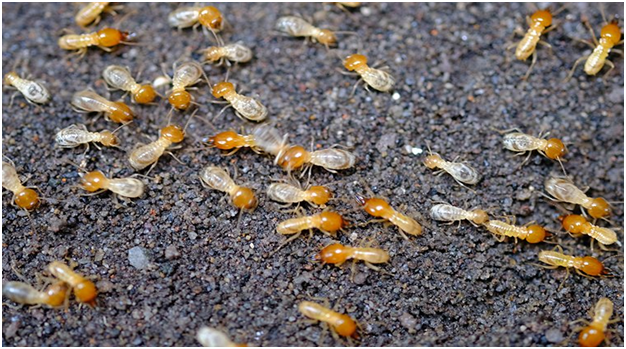
Do bugs like termite damage the wood in your house? If so, then you’re not alone. Every year, these bugs cause millions, even billions of American dollars in structural damage, and property owners spend at least two billion dollars to solve this problem. This article will focus on how people, as a consumer, can find out and help protect their properties from termites through efficient and effective prevention techniques, as well as appropriate use of various termite treatments.
How do people know if their property has termites?
The first thing people need to do when they want to prevent these bugs from destroying their facility is to be on the alert for these things. These wood-eating bugs rarely emerge from mud tubes, food sources, or soil through which they made their tunnels.
Want to know more about how these pests reproduce? Visit this site to find out more.
A lot of individuals are not aware that their house or businesses have these wood-eating bugs until they come across damages during construction or they see swarms of it. Some of the ways to find out if the property has these bugs are listed below:
Check by probing, hollow spots, or exposed plank using flathead screwdrivers.
Identify swarms (usually ants are mistaken as termites). Ants have longer front wings than their hind wings. Their antennae bent at more or less ninety degrees. On the other hand, wood-eating bugs have front and rear wings, which are roughly equal in length. Their antennae are pretty straight and may droop.
The most common form of these insects in the United States is the native subterranean termite. Less common kinds include the smaller dry wood variety, as well as the invasive Formosan kind.
How can individuals prevent an infestation?
Listed below are some ways property owners can do to help prevent wood-eating bug infestations to their house or business.
Make structures less attractive to these bugs
Tell construction firms to use concrete foundations and leave ventilation spaces between the wood and soil during construction. Make sure to cover exposed wood surfaces using sealants or metal barriers.
To find out more about these insects, check out https://www.britannica.com/animal/termite for information.
Maintaining termite prevention features
After the construction, make sure to keep the soil around foundations dry using proper drainage and grading (including appropriate maintenance of downspouts and gutters).
Minimize openings that offer insect access to the structure (filling cracks in foundations and around where utilities like pipes pass through walls using grout, caulk, or cement).
Fix pipe leaks immediately.
Keep ventilation free from any blockage, including clouds of dust, debris, and plant leaves and branches.
Make sure that shrubs and trees are not planted too close to the facility and don’t allow them to grow against any exposed wood surface.
Do not store or pule wood debris or firewood next to the structure.
Inspect regularly to help make sure that colonies don’t become established.
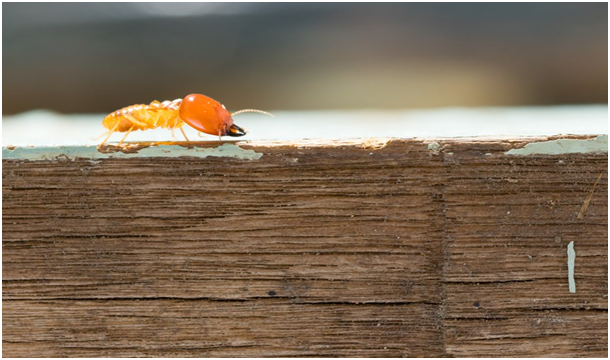
Different types of treatments?
Non-chemical treatments
There are ways to prevent termite infestation that doesn’t involve the application of chemical insecticides. For instance:
One method owners can use physical barriers, usually incorporated during the early phase of the construction.
Sands of certain sizes and steel mesh have been shown to perform efficiently and effectively as physical barriers.
Fungi and nematodes or biological control agents have demonstrated some excellent results, especially in lab settings.
Because these methods don’t involve insecticide applications, the Environmental Protection Agency doesn’t regulate them.
Chemical treatments
Before firms can distribute or sell pesticides in the United States, other than some minimum-risk chemical pesticides, the Environmental Protection Agency needs to review studies on these pesticides to find out if it will not pose unnecessary risks to the environment and people’s health.
Once they have made the determination, they will register or license that chemical for use in strict compliance with label directions. These pesticides that are used for the treatment or prevention of infestations are called termiticides. These things need to demonstrate the ability to provide effective termite control brick nj and structural protection before they are registered and licensed. In some cases, pesticide application can only be performed by trained pest management professionals.
Termite baits
Wood treatments
Liquid termiticides applied in the soil
Building materials soaked in termiticides
Common active components found in baits include:
Diflubenzuron – Prevents insect development
Hexaflumuron – Reduce the risk of using pesticides.
Hydramethylnon – Controls termites, crickets, cockroaches, and ants
Lufenuron – Regulates the growth of insects
Noviflumuron – Disrupts activity and growth of wood-eating insects
Borates – Protects wood through spray applications
