

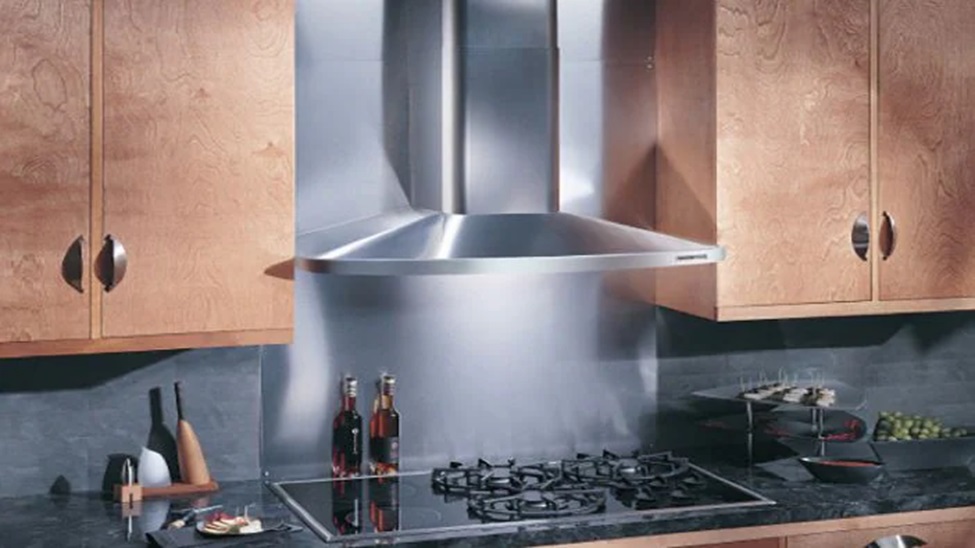
The best remedy for cooking grease, moisture and heat in your kitchen is to install a range hood. With a number of options and styles for built-ins, kitchen hood, ranges and islands, you can find the right solution for your kitchen.
Find the Best Range Hood for Your Home
The kitchen is the hub of your home. It’s where you have a bowl of cereal for breakfast, socialize with friends on the weekends and spend lots of time cooking. It’s also the room where odors, steam and fumes occur. A range hood helps vent out or filter the odors, grease and steam that can build up in a kitchen.
With a wide variety of range hoods available, it may be a daunting task to pick just one. There are many factors to consider before making your choice. Do you want a downdraft hood or will a wall-mount hood work better? How important is auto-shutoff to you? Vented, nonvented or convertible? These are all things to think about before buying a hood. This guide will help you find the best range hood for your home.
Best Range Hood Exhaust Types
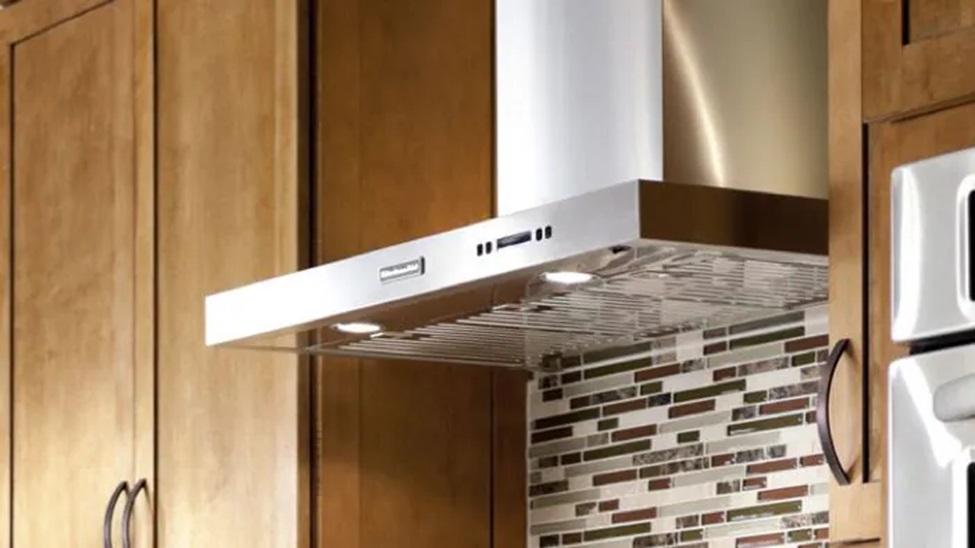
When replacing or installing a kitchen hood vent, it’s essential to consider the size, shape, and mounting type beforehand. Ensure that the new hood is at least as wide as the range or cooktop, with a preferable additional width of 3 inches on each side. Common widths include 30 and 36 inches. For optimal performance, position the hood 20 to 24 inches away from an electric cooktop and 24 to 30 inches from a gas cooktop. Always consult the specified requirements for the correct mounting height of the range hood.
The most critical decision in purchasing a stove hood vent is determining the ducting method. There are three exhaust options:
Ducted Range Hood
Venting the hood to the outside is recommended for complete removal of irritants. If your range hood is mounted to an exterior wall, shorter exhaust ducts result in increased efficiency. However, if your ducted range hood is installed on an interior wall or island, opt for a more powerful unit to ensure air is effectively forced further away. Proper installation of ductwork is crucial for optimizing the efficiency and overall performance of the range hood.
Ductless Range Hood (also known as Nonvented or Recirculated)
These terms are interchangeable and indicate that air is pulled through a charcoal filter to trap irritants before flowing back into the kitchen. It’s essential to replace filters every few months to maintain the hood’s effectiveness. This option eliminates the need for ducting.
Convertible Range Hood
These hoods offer the flexibility of both ducted and nonducted configurations. For superior ventilation results, ducting to the outside is recommended.
Types of Range Hoods
There is a wide array of range hoods to choose from.
Undercabinet Hoods
These are affixed to the underside of the cabinet above your range and can also be termed wall-mount if they are installed on the wall rather than the cabinets. Undercabinet hoods are available in various styles and strengths, and can be either ducted or nonducted.
Wall-Mount Hoods
Similar in appearance to undercabinet hoods, these mount onto the wall instead of the cabinets above.
Chimney Hoods
Chimney hoods can be installed on the wall above your range or on the ceiling above an island, featuring a flue that extends from the wall to the ceiling. Cabinets above the range may need to be removed for proper fitting and functionality.
Island Hoods
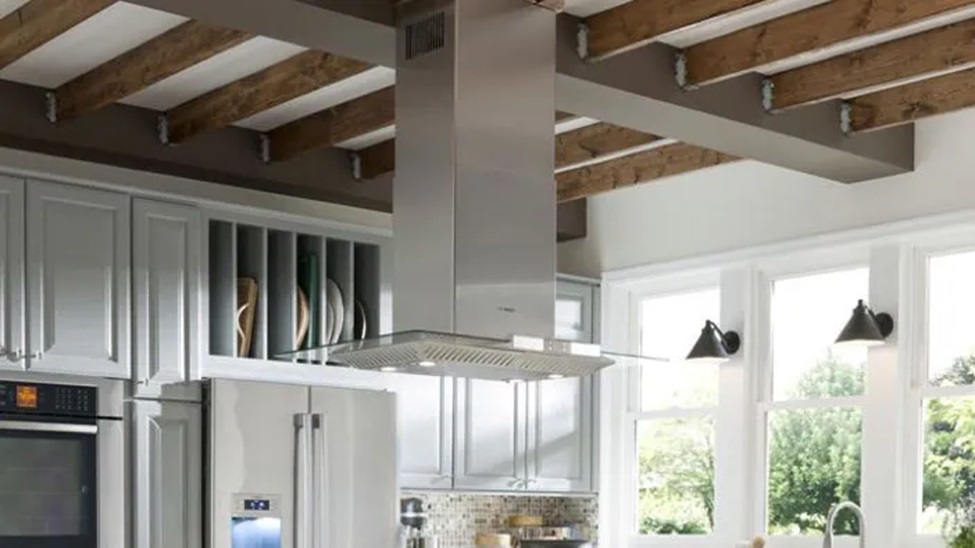
These hoods suspend from the ceiling over an island and are ideal for ventilating island cooktops. They come in various styles such as glass canopies, curved metal, and traditional designs.
Over-the-Range Microwaves
An over-the-range microwave serves as a space-saving solution for the kitchen, often replacing or complementing a traditional hood fan. For optimal ventilation, ducting to the outside is recommended rather than recirculating the air.
Downdraft Hoods
Concealed within the cooktop, downdraft hoods emerge when in use to horizontally draw steam and smoke across the range. They are popular choices for islands as they do not require conventional installation that may obstruct lines of sight.
Range Hood Inserts
These hoods, also known as power packs or inserts, are concealed within cabinetry above the cooktop, offering a custom approach to ventilation. With numerous options available, consulting with a professional can help determine the best fit for your cabinets.
Pro Hoods
Resembling undercabinet hoods but larger and more professional in appearance, pro hoods offer increased power. Ideal for frequent cooks who prefer a larger hood, they are available in various styles and can be either ducted or nonducted.
Custom Range Hoods
Personalize your kitchen with custom range hoods, tailoring the finish, color, and performance to suit your cooktop or range.
Range Hood Features
Range Hood Strength
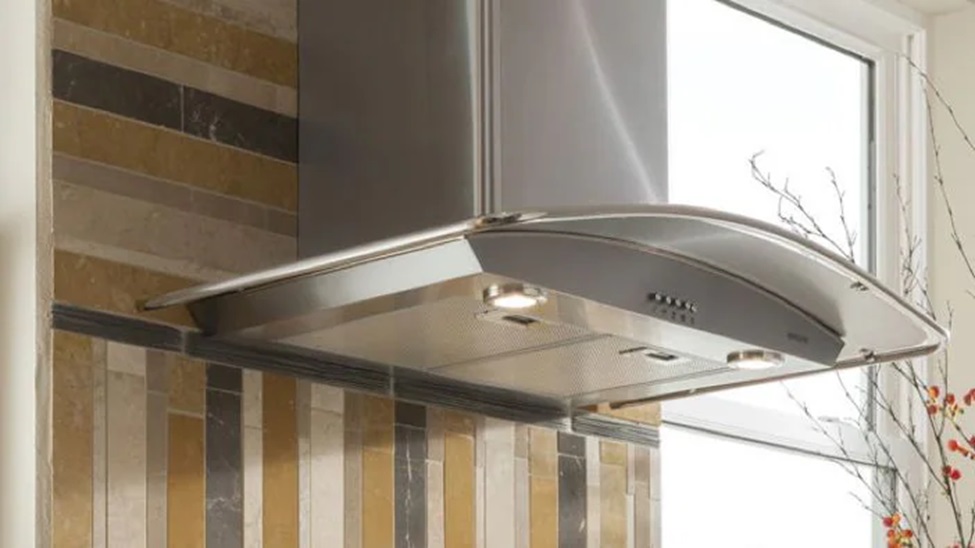
The effectiveness of range hoods is measured in cubic feet per minute (CFM), indicating their power or air movement. For kitchens with heavy cooking involving steam or strong odors, a range hood with at least 350 CFM is recommended. Additionally, for high-output gas ranges or cooktops, a minimum ventilation rate of 1 CFM per 100 British thermal units (BTU) is advised. For example, if your high-output burner outputs 45,000 BTU, opt for a range hood providing 450 CFM for optimal air clearance. However, it’s important to note that higher CFM results in louder operation.
Filters for Range Hoods
Ducted hoods utilize aluminum filters to trap grease before expelling smoke and odors outside. Clean the aluminum mesh grease filters in your dishwasher monthly, adjusting frequency based on usage, especially if cooking with substantial grease. In contrast, non-duct hoods employ charcoal filters to capture grease and smaller molecules, preventing them from recirculating into the kitchen. These charcoal filters require replacement every few months, depending on cooking frequency. Some hoods feature filter indicator lights to signal when it’s time for maintenance.
Range Hood Sound Levels
Range hood sound levels are measured in sones, with one sone roughly equivalent to the sound of a running refrigerator. Normal conversations occur at around 4 sones, while light traffic rates up to approximately 8. Use sones to compare units, keeping in mind that higher CFM typically correlates with higher sone ratings. The quietest hoods at standard operating levels are best suited for all-purpose use.
Other Range Hood Features
Automatic shutoff functionality can be preset to turn off the fan after a specified duration. Change filter indicator lights notify when cleaning or filter replacement is required. Heat Sentry™ or a heat sensor automatically adjusts the blower to high speed upon detecting excessive heat. Most hoods include lighting options such as incandescent, fluorescent, halogen, or LED bulbs, with one to four lights to illuminate the cooking area. Hoods with a low-light-level setting are beneficial for nighttime operation. Wi-Fi capability enables access and control of the unit from a smart device. Additionally, ENERGY STAR® certified range hoods are available in various styles.
