

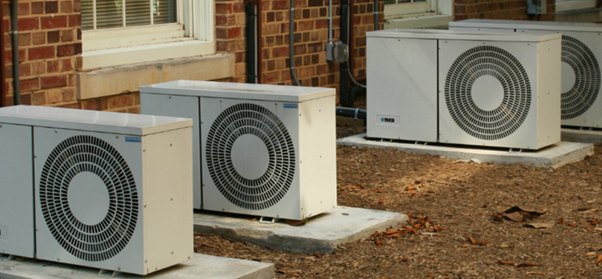
As the world looks for ways to become more energy-efficient and reduce its reliance on fossil fuels, heat pumps in Auckland have emerged as a viable alternative energy source. These are devices that transfer heat from one location to another, and they can be used for both heating and cooling.
How do heat pumps work? The science behind this alternative energy source is actually quite simple. These devices use a refrigerant to absorb heat from the air, water, or ground and transfer it to the desired location.
How do heat pumps work?
A heat pump is a machine that uses the energy of the movement of air and water to create a system of moving refrigerant gas between two chambers. The gas cools as it moves through the coil and condenses back into liquid in the condenser chamber, where it is pumped back into the compressor chamber. This process continues until equilibrium is reached.
The history of heat pumps:
Heating pumps were developed in the 1800s when people were looking for ways to cool buildings during the summer. The first heat pump was called an air-to-air heat exchanger. While air-to-water heat exchangers came later, they are still used today.
The history of these devices is a long one that spans more than 100 years. It’s a story of innovation and progress in which scientists and engineers have made significant contributions to the field of heating and cooling systems.
Types of heat pumps:
There are 4 main types of heating pumps: water source, air source, ground source and absorption.
- The water source type is the most common type of heat pump used in North America and Europe. It uses a tank of water to absorb and store the heat from the outside air before releasing it into your home.
- The air source type is used in countries with warmer climates, such as Australia and New Zealand. It uses outside air as its primary heating medium by exchanging thermal energy with a refrigerant fluid inside the unit.
- The ground source type is typically used in colder climates where it is too cold for outdoor air to be used as a heating medium. It uses a refrigerant fluid in the heat pump that circulates through the ground.
- The absorption type is typically used in warmer climates where outside air is too hot for comfort and does not have enough moisture for evaporative cooling. This type of heat pump uses outside air as its primary heating medium, but the refrigerant fluid in the heat pump also heats the air.
Components of a heat pump system
A heat pump system has four components: an outdoor unit, an indoor unit, a refrigerant (R-134a), and an expansion valve.
- The outdoor unit is where the heat or cold comes from. The outdoor unit usually takes in air from outside and produces warm or cold air inside the building, depending on its location on the circuit.
- The indoor unit is where the heated or cooled air goes to. The indoor unit usually takes in cool or hot air from inside the building and produces warm or cold air outside of it.
- The refrigerant is what makes this whole process possible because it changes its temperature when exposed to varying temperatures.
- The expansion valve allows different pressures to be regulated, which is necessary because the refrigerant has low pressure at points inside the system and high pressure at points outside.
How a Heat Pump Can Help You in 3 Ways
Heat pumps in Auckland can be used in a variety of ways, and they can help you in three ways.
- First, it can help you save energy by cooling your home or office and reducing your utility bills.
- Second, it can help you maintain the temperature of your home or office no matter what the weather is like outside.
- Third, it can help you save money by lowering the cost of heating your home or office with natural gas or electricity.
